

It's my fault, I complained about no news, so the NHL obliged with some of the boring and tedious news they love to dump out on us.
The transition rules for the new CBA will be formally announced soon, but at time of writing, PuckPedia has the details. First, to refresh your memory, the current CBA is in effect until next September. The new deal announced this summer will take full effect then. When a new CBA takes over for an old one, there is always a planned transition, and some new things take effect – by mutual agreement between the NHL and the NHLPA – in the final year of the old deal. That's what's happening now.
The PuckPedia writeup: https://puckpedia.com/news/CBA-Transition
What concerns us most today is the things taking effect for this season. They are:
Contracts cannot have deferred compensation. John Tavares just signed a deferred deal, but his is fine. This end of the very short deferral era comes on October 7 – the date the regular season actually begins.
The set of restrictions for loaning players to the AHL that are designed to end the "papering down" process of sending a player to the AHL but not actually having them physically go there is beginning this season. This rule should have a pretty big effect on how teams manage their cap space – papering up and down is a common practice of teams banking space – or their dollars – by sending players on two-way deals to the minors for a few days to pay them less.
This is also going to make the process of roster management a little tricky at times when waiver claims or trades require some roster room for a day.
Trade deadline is going to get very dull since there are restrictions on double retention trades that effectively make them impossible to carry out. Salary retention is further disincentivized under the playoff cap rules, more on that in a moment.
There is a small change to the post-trade-deadline recall rules that will take effect this year.
The big one is the intertwined LTIR/Retention/Playoff Cap rules that will go ahead for this season.
This is a complex set of rules, but the gist of the playoff cap is that it is somewhat like the regular cap calculation, but different enough to trip up casual observers into thinking there is a problem when there isn't or vice versa.
A playoff roster must fit under the salary cap ceiling, counting the cap hits of all players dressed for the game (so fewer than the full cohort of players on the active roster). Also included are the "dead cap" amounts for buried cap hits, buyouts etc. Not included are performance or games played bonuses – the sort usually seen on 35+ contracts.
There is one more thing included: retained salary.
When a team trades a player with retention, they have their retained portion of the cap hit on their books prorated for the number of days remaining in the season plus the full amount from before the trade prorated out to those days. The acquiring team gets the player at the non-retained portion of the cap hit prorated as well – as long as they are not using LTIR to cover the new player.
Simple, yes? And how it's always been done.
Under the playoff cap, the retaining team (should they be in the playoffs) have to count their prorated retained cap hit). But the acquiring team doesn't get to prorate the new cap hit. They have to count the full un-retained portion. On the regular season cap, nothing is changed, but suddenly, come playoff time this player is more expensive.
LTIR changes mesh in with this new playoff cap, so they will also take effect. They are simple, yet can be painful for a team with an injured player who is a high-earner. I think this rule punishes teams for having star players or for being unlucky in the timing of injuries, but an argument can be made it's more in the spirit of LTIR as a replacement for a single injured player, not a slush fund.
When a player goes on LTIR, and that player is expected to return in the season or the playoffs (so not a career-ending injury) the amount of relief the team gets (so LTIR pool room) is set at the previous season's average league salary. This will be something approaching $4 million, but the exact amount isn't released yet for last year.
If you declare a player unfit for the full season and use their full LTIR space over the average salary amount, you cannot reactivate that player. (Let's just call this the Gabe Landeskog rule.)
The final thing is the one 19-year-old in the AHL rule. It may be available this season, but that depends on an agreement that has not yet been negotiated actually being finalized.
In "how does this affect the Leafs" analysis: not much. They will be looking to add a player or players via trade, and not in the deadline rental sense, so they need to think long term about cost and cap space anyway. They have no motivation to go for double retention. There's no reason they'd struggle to have a playing roster that fits under the playoff cap. They can absolutely re-sign Max Pacioretty with some juicy bonuses in his contract to make that easier.
Now, get into the new salary term limits, bonus structures and variability rules and a cash rich team that can and will front load and bonus load a contract is going to lose some of their advantage in re-signing players. But that's for next year.
Check out the link above for more detailed explainers on all of this including a playoff cap example using Edmonton and Florida.
In other news, in case you missed it, Dennis Hildeby has re-signed.

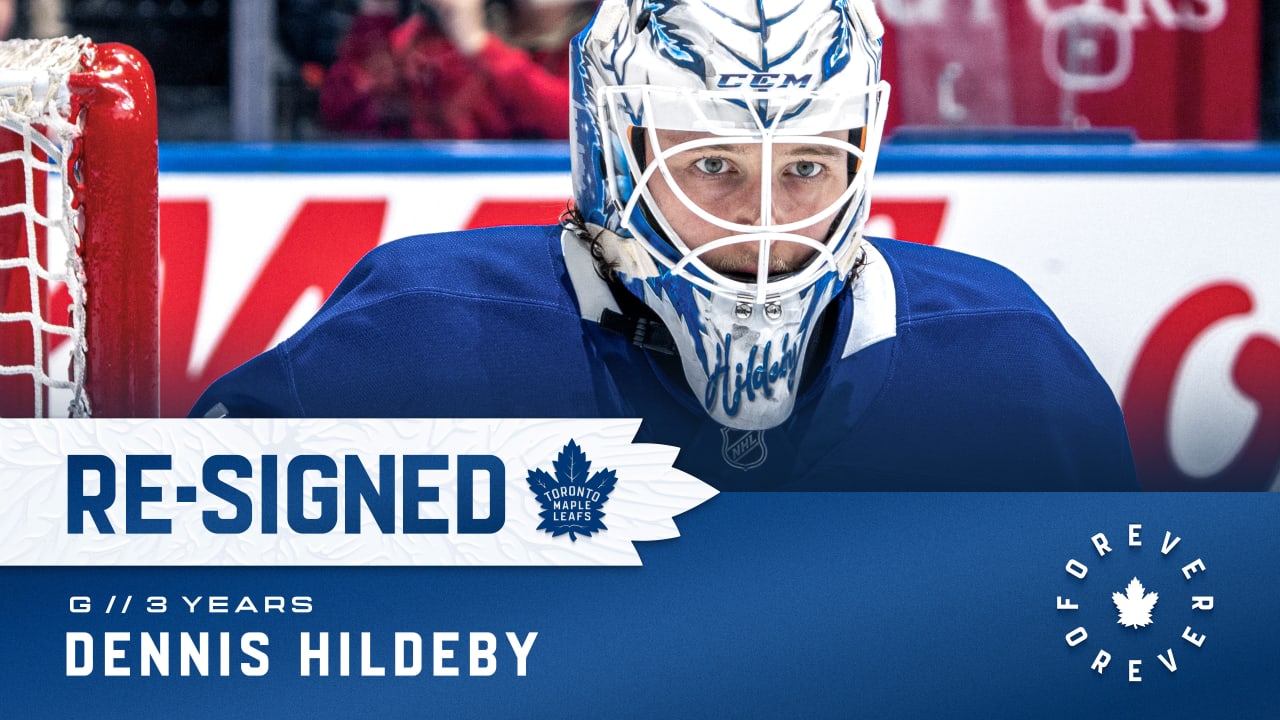
The #LeafsForever signed 24 y/o RFA G Dennis Hildeby to a 3 year $841,667 Cap Hit extension
— PuckPedia (@PuckPedia) September 2, 2025
Yr 1: $775K Salary, $350K Minors
Yr 2: $850K/$450K
Yr 3: $900K
Will be RFA w Arb upon expiry with $945K QO
Rep'd by Craig Oster @TheHockeyAgency https://t.co/qp1bQ50Mkw
The Leafs now have no unsigned players.
 Eric Engels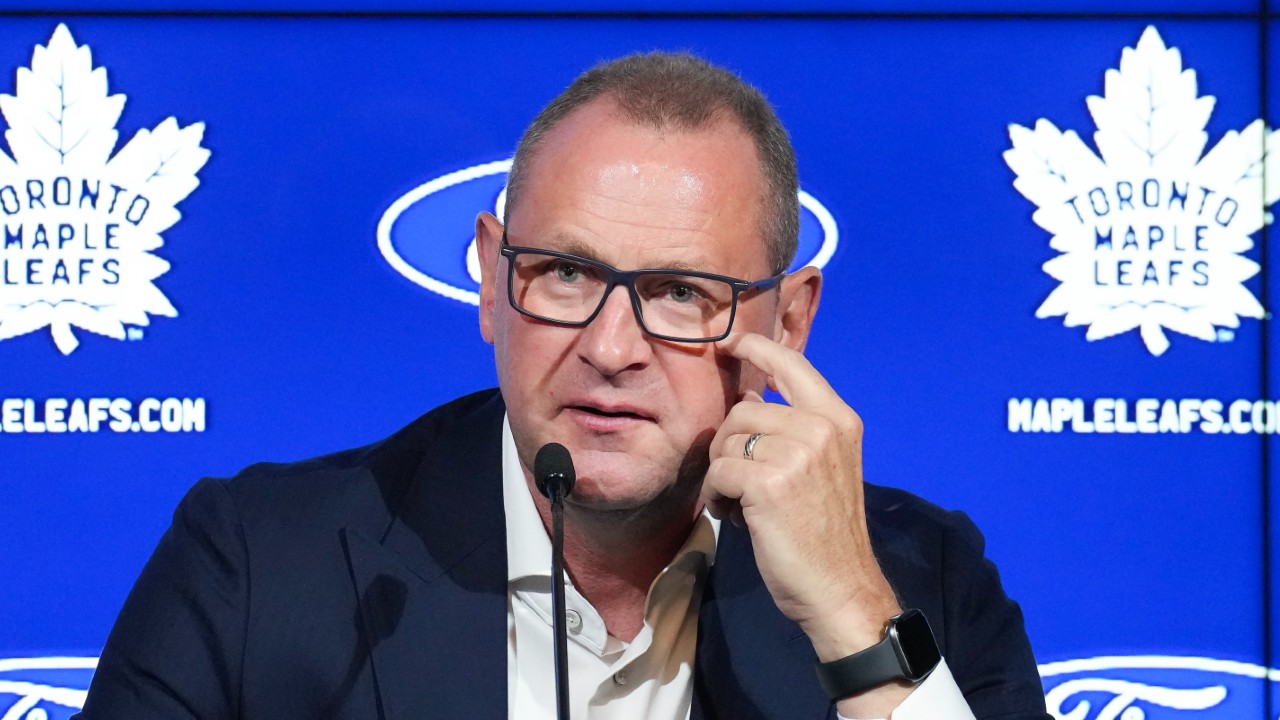
More than likely, unless something changes, we’ll go with what we’ve got and see where it all sorts itself out.
Now that is the most beautiful sentence any GM has ever uttered in the history of utterances.
We have more T25 today, and since the NHL GMs and coaches are meeting today, there might be more news or utterances.
Happy Wednesday everyone.


Comment Navigation & Markdown
Navigation
cc to focus on comments section
c next comment
x previous comment
z next unread comment
Inline Styles
Bold: **Text**
Italics: *Text*
Both: ***Text***
Strikethrough: ~~Text~~
Code: `Text` used as sarcasm font at PPP
Spoiler: !!Text!!