

The first time John Chayka collected information and then analyzed it in a search for a deeper understanding of hockey his subject was himself.
He filmed his own games and his teams' games as a junior player with fellow Stathletes founders Meghan Chayka and Neil Lane sometimes running the camera. He eventually formalized his concept into his first business supported by his father and Andy O'Brien to come up with a service for players that would improve their training.
“You hear a lot about ‘work ethic’ or ‘compete,’” Chayka says. “I always thought it’d be great if you could actually dig into this and try to understand, in objective terms, what it means and if it’s even important. There were some people who I felt were valuing things that were irrelevant, and some who weren’t valuing things that were actually really important.”
Chayka got into hockey management at age 19 after his junior career ended due to a chronic back injury. His initial goal was to bring together a group of on and off-ice trainers to help elite hockey players. He quickly found that if he wanted to convince an NHL-level player to change something like his shooting, it was useful to break down his shooting through intensive video game analysis, discerning any tendencies and weaknesses. Chayka did this video work along with his father Terry.
“He was very young at the time and people didn’t necessarily take him as serious,” [Neal] Lane says of John. “When you have a Sidney Crosby come through your school, he’s not as inclined to listen to a 19-year-old as he would be somebody more senior, so John started putting numbers behind player’s games and trying to communicate with them in a way that would remove opinion, and it got very well received.”
Inside the Moneypuck methods of new Arizona GM John Chayka by David Staples
A back injury forced Chayka to stop playing hockey, and while he never was at the elite level, he was close enough to have had a scholarship to Cornell. With that gone, he ended up at Western in London, and then to the Ivey School of Business which is where Stathletes was developed.
Stathletes quickly began to grow, and Chayka found himself building a good reputation and solid relationships with people within the NHL that would ultimately become valuable as he moved beyond his organization.
“It reached a point where there was enough talent and support around the business that it was no longer dependant on one of its founders and myself. I actually felt that at times I could potentially be holding the business back because there was a wealth of talent below me that was ready to take their next step as well.”
But it was a combination of the skills he learned through Stathletes and his time at Ivey that would play a big role in Chayka’s career. Graduating in the class of 2014 with an HBA from Ivey, Chayka credits Ivey with instilling a mindset that drove him to strive for excellence and found himself especially inspired by his peers.
John Chayka's rapid ascent in the world of professional hockey by Katie Lear
Stathletes is now owned and operated by Meghan Chayka and Neil Lane.
John Chayka is so famous as the youngest general manager in NHL history, that it likely comes as a surprise to people that he was an AGM for a season with the Coyotes first. Once he had the big job in May of 2016, his first job was the draft, but it wasn't his first time there.
Although [Steve] Sullivan – who played 16 seasons with the New Jersey Devils, Toronto Maple Leafs, Chicago Blackhawks, Nashville Predators, Penguins and Coyotes – admits that he was skeptical at first of Chayka, he was impressed with the latter's decision-making during Chayka's first draft with the team, then as assistant general manager, in 2015. Sullivan recalled how Chayka wasn't afraid to voice his opinion about prospects, even when it was contrary to those of some of his older co-workers. That chutzpah quickly won Sullivan over, and the two became friends.
"He had his laptop and he had all these numbers [that explained] what draft picks were worth, what would happen if you make a trade and what you would need in return if we were trading a certain pick or certain player," Sullivan said. "He was pretty vocal and confident in himself for someone we had just hired. I was still suspicious, but it takes very, very few conversations with him about hockey to realize he does have a very high knowledge of the game. And once you realize that, it just becomes two guys talking about the game."
Chayka uses analytics as a tool in his decision-making process and as a resource in dealing with players, coaches, agents and opposing GMs. But he also relies on the eye test. He had written the Coyotes' lines in a leather-bound notepad, and at various points during the first period, he scribbled ideas and thoughts on the page.
Well, in fact, his first job was really to tell Shane Doan he wasn't being re-signed which marked the end of Doan's playing career.
John Chayka, the Arizona Coyotes' whiz-kid GM, is more than just a numbers nerd by Josh Cooper
Not long after he became GM — he was originally hired by Arizona as assistant GM, analytics in 2015 — he got together with defenceman Oliver Ekman-Larsson to ask the Coyotes’ most important player who his ideal blue-line partner would be. Ekman-Larsson said fellow Swede Nik Hjalmarsson was a perfect fit. After some serious digging, Chayka came to the same conclusion and — one year later — pulled the trigger on a trade with the Chicago Blackhawks to acquire the three-time Cup winner. “I needed to find a way to get him to take that next step to be that elite guy,” Chayka says of Ekman-Larsson. “Look what [Erik] Karlsson did for Ottawa.”
Numbers Game
As it turned out Oliver Ekman-Larsson and Nik Hjalmarsson barely played together. However, their results from that season show they were likely the two best defenders on the team with Ekman-Larsson getting more offensively focused usage from the new coach with Hjalmarsson being kept for defensive usage. This is not the first time, nor will it be the last, someone believed that an offensive defender needed a defensive conscience. That season's results also show that Chayka's overall plan of insulating very young players with veterans was paying off for Jakob Chychrun, or at least that's my take from a few minutes spent on HockeyViz.
For a deeper look at Chayka's trades and signings in Arizona, this exhaustive study is exactly what you need. The outlook is balanced with some attention given to the situation the Coyotes were in at the time:
 JP Gambatese
The above post also covers the two concurrent situations that wrapped around Chayka's departure from the Coyotes, but it's worth noting that when he was made GM of the team Andrew Barroway had the controlling interest in the ownership group, and then owned the team outright after Chayka's first season.
In November of 2019, Barroway sold a controlling interest to Alex Meruelo who was acting as the owner of the team when Chayka left on July 26, 2020, right before the playoffs were to begin. Bill Armstrong took over in September and Steve Sullivan's contract was terminated in February of 2021 with no reason made public. Sullivan had been acting GM before Armstrong arrived.
In 2020, the draft was in October, and there was no Combine. The violation of NHL rules by the Coyotes staff occurred sometime before the playoffs, and there are reports that this was not a one-off practice of the team to engage in physical testing of draft prospects, but an ongoing project.
As discussed in the piece on what teams use analytics for from the HALO conference, biometric data is standard in other sports, and there will almost certainly come a time when what Chayka and his staff were doing then is no longer controversial. The NHL's position is they are protecting draftees from having to be tested repeatedly, but there is an argument to be made that the NHL was protecting its turf over the type of testing they do at the Combine, most of which is not terribly meaningful.
Chayka began his foray into evidence-based hockey analysis focused square on training and performance, so this is his core area of expertise. This company (with a vested interest in this issue) has some things to say about the Combine tests:
 iclarke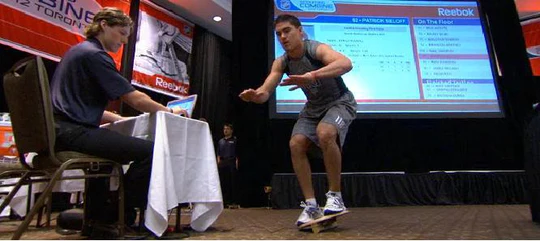
The first thing Chayka did when originally hired by the Coyotes was to attend the Combine. It's clear that his focus starts with player development and moves out from there to the draft, to trades and to the team play as a unified system.
As far as we know, this conflict between the team and the league was not part of the breakdown in the Chayka relationship with ownership. That relationship had been great, with Meruelo authorizing more spending and also extending Chayka's contract only a few months prior to the bust up. The Coyotes made the playoffs for the first time in the bubble and began playing right after Chayka left. Ask any Utah fan today about the Nick Schmaltz trade, and you won't hear complaints.
The circumstances of the contract dispute and his desire to leave for a job with the Devils have been rehashed several times, but this ESPN take seems to find the middle ground that could well be close to the real story. I don't claim to know.
After Chayka requested his release to leave for the new job, sources said Meruelo "felt lied to" and "betrayed" after the previous conversation [where Chayka is said to have claimed it wasn't a job interview], the contract extension and the financial commitment to Chayka's plan for the Coyotes, which included a December 2019 blockbuster trade for Devils winger Taylor Hall.
After denying Chayka's release, the relationship between the GM and ownership became strained and acrimonious. The team offered to revisit the situation with Chayka after the conclusion of the season, according to sources. Chayka reportedly didn't trust that delay, and felt that denying him an earlier exit was "unreasonable." The team would reply that he was under contract.
Sources say things boiled over between Chayka and the Coyotes when it became clear that the job he wanted to take was rooted in hockey operations, making it much more of a lateral move than previously indicated.
In hindsight, we all have a better understanding of Alex Meruelo and his business practices, and maybe that casts a new light on all of this.
Why are the Leafs interested in Chayka with this baggage of past behaviour attached to him?
The first thing we should consider is that a lot of other people have baggage that just never got made public. What you see is not all there is. But Chayka's been doing, or trying to do, the things that teams do now in other sports to apply analytics to their evaluations to get a competitive edge. He was integrating video and data analysis long before anyone else was thinking that way. He wanted biometrics before the Whoop was invented.
If the Leafs want to surge ahead in their use of new technologies and new techniques, he wants it even more. I think that's the attraction, and his past baggage is all about trying too hard to get ahead.
In the piece from Sportsnet, Numbers Game, this paragraph stood out:
About once a month, Chayka has dinner with some of the brightest sports minds in the Valley of the Sun. The supper club includes Ryan McDonough, GM of the Phoenix Suns; Mike Disner, director of football operations for the Arizona Cardinals; and a pair of guys from the Arizona Diamondbacks’ front office, general manager Mike Hazen and assistant GM Jared Porter. They discuss everything from maximizing sleep to in-flight nutrition to how to best make players’ families comfortable and happy. “We’re after information; we’re after competitive advantages,” says Chayka.
That's the HALO panel. Once a month almost a decade before the NHL held their first analytics conference.
Two other things struck me in reading up for this article: The Leafs have access to Steve Sullivan, Oliver Ekman-Larsson and even Shane Doan to get the behind the scenes story on the Coyotes of that time. They have outside perspectives we don't.
But the other thing is that this information is out there in a flood. I still haven't figured out where exactly Scott White is from, as a comparison. It's not just the two "scandals" that ended Chayka's tenure as GM that are repeated all over the place, but all the other things, quotes to everyone, from the UWO Gazette to big pieces in every outlet that still wrote things longer than a Tweet in the past. John Chayka has always been willing to get the word out about John Chayka.
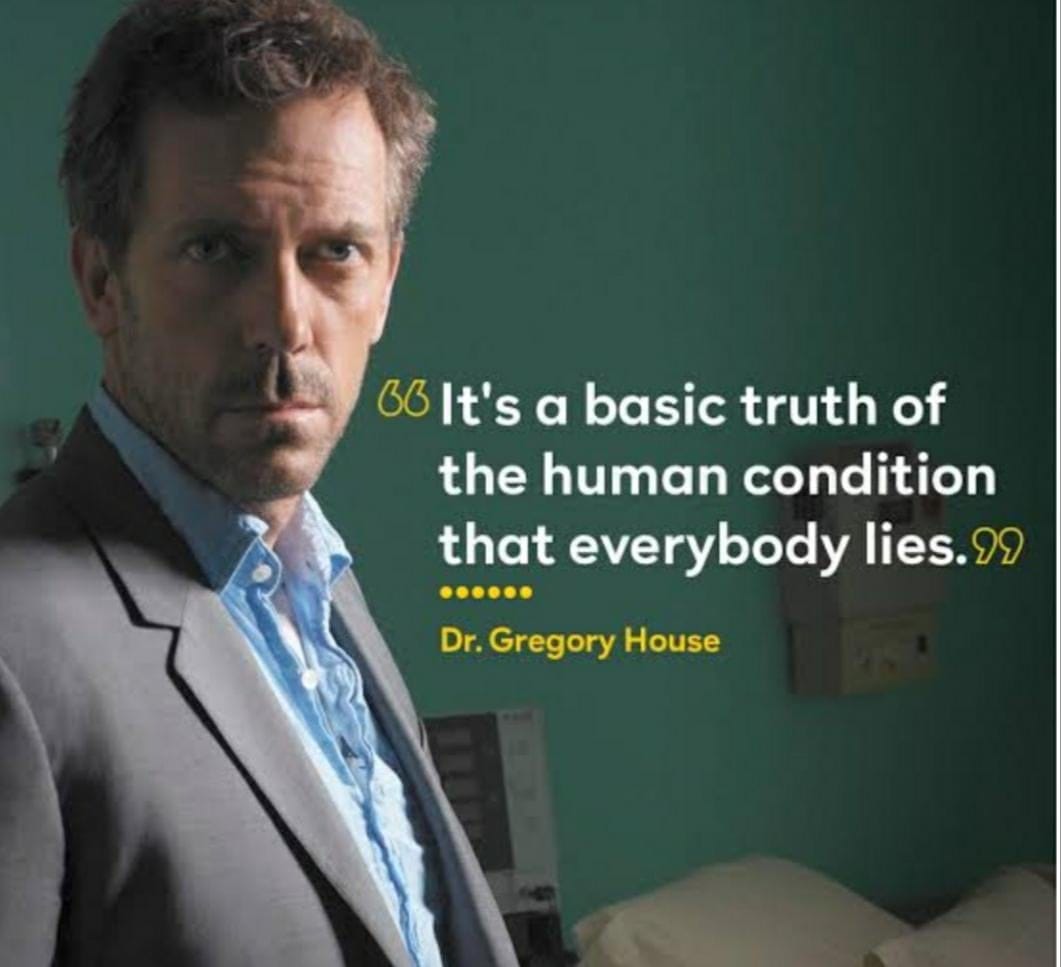
It's not that that's inherently bad, because that's just more of his drive and ambition on display, which is clearly massive. But it does mean he's had a hand in a lot of the things that are quoted here. To use that bastion of evidence based thinking to end on:


Comment Navigation & Markdown
Navigation
cc to focus on comments section
c next comment
x previous comment
z next unread comment
Inline Styles
Bold: **Text**
Italics: *Text*
Both: ***Text***
Strikethrough: ~~Text~~
Code: `Text` used as sarcasm font at PPP
Spoiler: !!Text!!