

I'm about to ramble about drafting, so I'll put this at the top. I went to clean out the spam memberships the other day and I was surprised to discover how many of them were real. So welcome new people.
Some things to help you.
Welcome new readers and members
If you're completely new to PPP please read the Community Guidelines. The About Page gives a brief outline of who we are and how we came into being. If you're not completely new, you should read the Community Guidelines.
If you need help with something, check out the How To section, particularly the FAQ If you can't see the comments, go to the FAQ first If nothing there helps, drop an email to us. Look for the Contact link in the footer.
You have to be a member to comment, and membership works on an email-based, no password system. You will be sent an email with a secure login link or a URL you can copy if you want to use a different browser to where you get your email. This is a fairly uncommon system, so if it causes you trouble, ask for help.
If you're going to the trouble of making an account to make trolly comments as a fan of some other team, may I suggest you start your own blog and build out the site and customize the experience for your readers. You suddenly won't have time for that nonsense.
Any other questions, just ask, someone will either know the answer or lie convincingly.
Also, so you understand, this site is 100% paid for by members' subscriptions. If you want to know more read this How To article:
 Cathy Squires
Subscriptions are what it says on the tin, they renew automatically. If you would like to donate one time the tip jar link up in the top menu is what you need. If you don't want to support us financially, that's totally okay. I would need to make an effort to know who is a paid subscriber and who isn't, and I choose carefully where to put my efforting, so I don't keep track.
One other note. This is an observation not a complaint but it somewhat relates to topics that do come up when discussing hockey from an analytical perspective. Particularly about draft prospects. There's been a couple of comments here and there that made me pause, and I wanted to clarify my thoughts on something.
There is no wrong way to perform your gender. There isn't a moral hierarchy of gender diversity. There isn't one true way for a hockey player. There isn't something about character you can discern from performance of gender.
If you moralize about gender performance here, you are doing it in a venue where I guarantee you will be insulting someone. This isn't about being offended, it's about everyone recognizing that "we" are not all alike here. Something we all should always assume anyway.
Okay, welcome, try to remember, hockey is fun. And if you signed up to give us a talkin' to, well, on your head be it. We've had decades to refine techniques to deal with that.
I'm not sure it's really sunk in yet that the Leafs have the first overall pick. I'm not sure I've moved off my initial reaction which involved a lot of laughing. But time comes at you whether you want it to or not and we are now six weeks and change to the draft itself.
This means it's prospect prospecting season full on, although I do hear some people watch the playoffs as well. There was some limited chatter about a game last night? I don't now. There are almost no prospects of note to watch who are still playing. Ivar Stenberg is likely to play for Sweden at Men's Worlds, as is Viggo Björck. That will be announced today and the tournament starts Friday. Everyone else is practicing pullups for the Combine which is only three weeks away. The Marlies don't play again until Thursday.
I have not followed prospects in years. There's hot young stars in the NHL who surprise me when I see them because I've never heard of them until there they are playing at a high level. I am assuming many other people have been similarly disinterested, so before we get to Brig's comprehensive look at draft prospects for both the first overall and the second rounder, as well as the late-round picks, I wanted to profile the top prospects for all of us clueless types who haven't been paying attention.
The first piece is out today, and it's not a scouting report or even a compilation of scouting reports it's an exercise in the basic history of these players and what the narrative that's been built up around them is all about.
This is narrative building:
I stumbled on something recently that got me thinking about how we think about prospects. It's the "in mice" bot.
in-mice is a reddit bot that tracks posts in the popular r/science community. When it finds a headline that tries to frame mouse model research breakthroughs as human medical science, it adds the comment ‘…*in mice’ to the post.
For example: The headline ‘Nasal Vaccine may Aid Fight Against New Viral Variants’ may lead readers to believe that this vaccine has been tested in humans and will soon be available to the public. In reality, the research paper is about a set of mouse experiments, and it could be years before this translates to a human vaccine. A more responsible headline would be ‘Nasal Vaccine Generates Robust Antiviral Immune Response in Mouse Experiments’.
Why do we need this?
Molecular, biochemical and occasionally even behavioral research in 🐁 models can be very fruitful. But it’s important to note that many results seen in animal models will take years before they are translated to the clinic. Many don’t make it.
Let's take that last paragraph and re-write it.
Junior, NCAA and occasionally European Men's team data can be very fruitful for evaluation. But it's important to note that many results seen in those leagues can take years before they are translated to the NHL. Many don't make it.
I can't, much as it would make me laugh, build a bot to append "in junior hockey" to every statement made about a top draft prospect, so what I urge everyone to do is mentally add it yourself as a hype corrective. By T25 season, it might be ingrained. Also, seriously, learn to look beyond the headlines on medical research. Reading the entire story is one neat trick that helps with that.
Every year someone will roll up at the T25 and tell us all as if it's a new idea that really that one dude on the internet there that does tiers of prospects, that's way better and you should totally do that and why no, I got no clue how, but you should. The T25 is an old thing set in its ways, and its ways are for fun, not deep analysis or complex voting schemes. But it still teaches so many lessons, and one of them absolutely is that figuring out relative values of disparate prospects is really difficult. A lesson that flies out the window when the hindsight goggles get snapped on and people judge prior drafts.
When anyone is talking about prospects, they are describing one guy, usually. Although there is going to be a lot of McKenna vs Stenberg. It's extremely difficult to compare their value to a team. Not least because we don't all agree on the definition of value.
I mentioned this is the comments the other day, but Billy Beane's philosophy of drafting for the Oakland A's was to find players with flaws other people thought were important, but he believed didn't matter. He considered that knowledge not belief. I couldn't help but think of Sebastian Aho, the man no one thought was anything like who he is because of things about him that don't matter.
It's been long enough we should have grappled with what physical dimensions in a prospect mean and don't mean, but it's so emotionally fraught – big man, grr, make big hit, go boom – that maybe it will forever be something only some teams grasp. But what Beane's ideas really made me think about is our obsession with the complete player. It's dangerous to port baseball ideas into hockey because they measure defence a little better. But what Beane thought was true (and I see no reason to doubt him) is that defence doesn't matter if you generate enough offence "in baseball".
Hockey people of all kinds love the complete player. I read something recently about a baseball reporter decades ago, who listened to a hockey game on the radio, having never paid any attention to the game before, and he described it as listening to an endless description of failure. Yes, that's it! That is what hockey is, endless trying punctuated by occasional explosive success. Given that, it's natural that the fan engagement is mostly complaining about mistakes. There's lots of them. A complete player may generate fewer complaints. And so we like them more. And we'll sell the chance for more bursts of offensive excitement for a quiet life. We'll come up with truisms and systems and coaching preferences and stories about how you win in the playoffs to keep Mr. Failsalot off the ice.
Mr. Failsalot can hurt you. Mr. Complete does that less.
You might think I'm talking obliquely about Morgan Rielly, but really it's some other guy:
Sportsnet Staff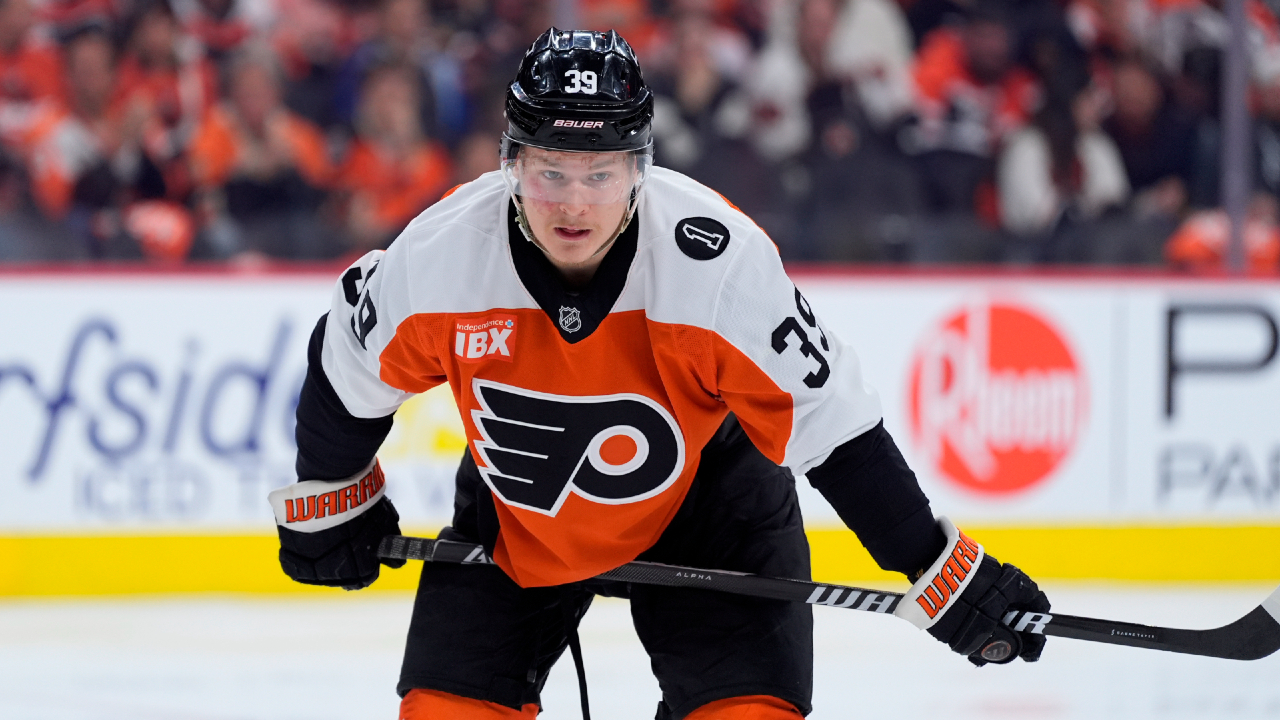
And Mitch Marner, and all the wrong lessons learned from his scoring burst in the playoffs now vs in the past.
How often, when we look at prospects with a rapt attention to how they spread out their skill points when they made their character, do we see imbalance itself as a flaw. When the person just put a point in every category, we see the balance as a positive.
It's really hard to not just complain about the flaws and miss the overall value. The question of which skill detriments matter and which don't is not a robustly studied area of hockey. Faceoff skill above average is very unimportant, and that's about the only thing anyone's ever seriously quantified.
I have some opinions on this. I actually do think there is a minimum in-zone defensive ability that is needed in a defenceman, and that transition skill cannot make up for a lack of it. In other works, the player being able to impact overall shots against in a good way can be obliterated by not being of any actual use defensively. Overall shots against or quality of shots against can't measure that kind of defence either. And no one player is on the ice enough to determine how they impact the goalie making saves or not in a reliable way.
I don't care at all about a defenceman's personal shooting. But I don't think we in general really understand what forwards can be bad at and have it not matter at all – thereby generating the secretly good player. I think, but do not know, that offence creation is the most important thing a forward can do. This is why I have some patience with he who shall not be named, this season excepted.
Rule one is pointz lie, but rule two is a little more hazy, because it's hard to be sure about what does and does not matter in individual player evaluation.
This is my off the cuff list of defencemen who I think are particularly gifted at defence, although Forsling had a bad year (by his standards) like the rest of his team, I'm keeping him on my list. It's tilted east because I know them better.
- Jaccob Slavin - 120
- Gustav Forsling - 126
- Adam Fox - 66
- Moritz Seider - 6
- Jonas Brodin - 10
- Adam Pelech - 65
- Artem Zub - undrafted
- Chris Tanev - undrafted
Just some food for thought on the nature of drafting defencemen. Or of trading for them, and how their offensive impact should be the third thing you look at after defending and transition. Oh, and offensive vs defensive defenceman, aside from being too simplistic, doesn't map onto height like so many believe. It's not actually about masculinity either.




Comment Navigation & Markdown
Navigation
cc to focus on comments section
c next comment
x previous comment
z next unread comment
Inline Styles
Bold: **Text**
Italics: *Text*
Both: ***Text***
Strikethrough: ~~Text~~
Code: `Text` used as sarcasm font at PPP
Spoiler: !!Text!!